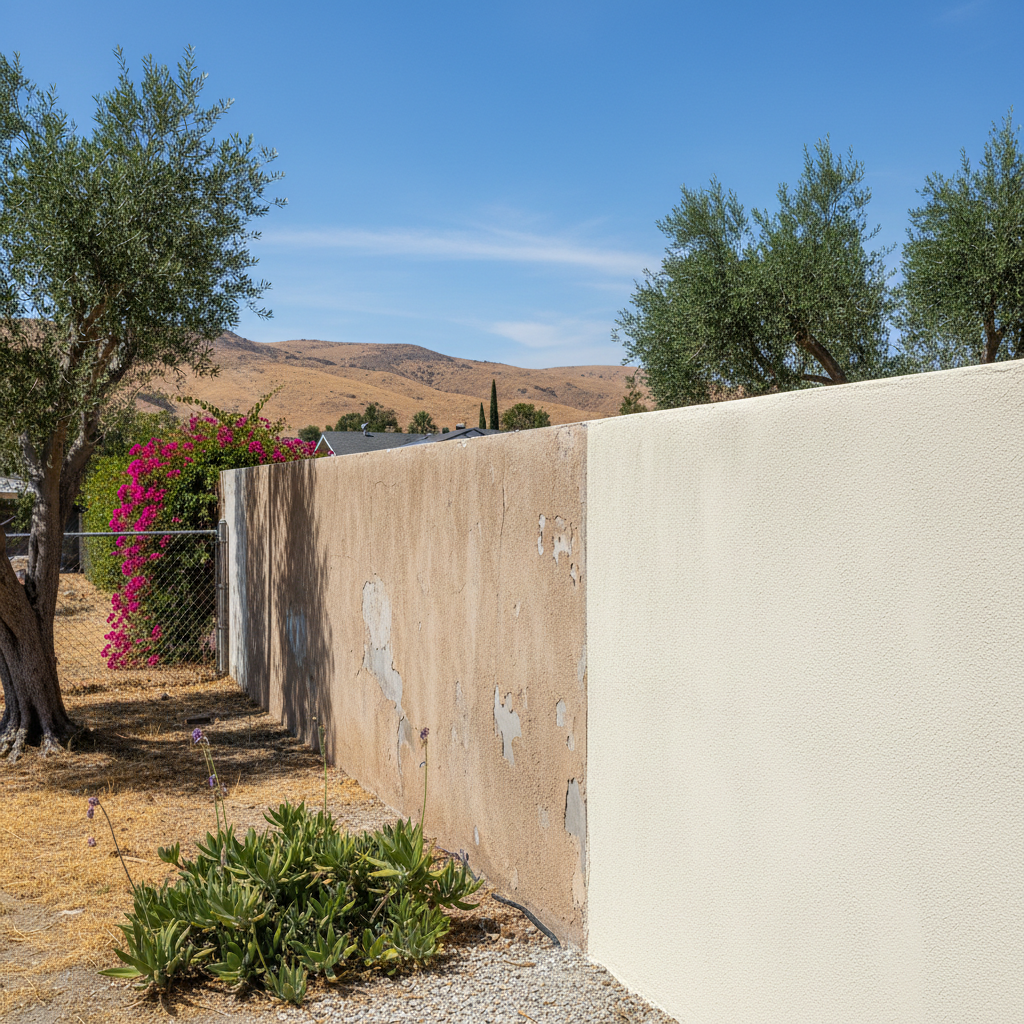
Thinking about stucco for your house here in Rialto? Good choice. It's a classic for a reason, especially with our hot, dry summers. But when you start looking into it, you'll quickly realize there isn't just 'stucco.' You've got two main players: traditional cement stucco and what's called synthetic stucco, or EIFS (Exterior Insulation and Finish Systems). People ask me all the time, 'What's the difference, and which one should I go with?' Let's get into it.
Traditional Stucco: The Tried and True
This is what most people picture when they think of stucco. It's a mix of cement, sand, lime, and water, applied in layers over a wire lath. We're talking three coats here: a scratch coat, a brown coat, and then the finish coat. It's been around for centuries, and for good reason.
- Durability: This stuff is tough. Once it cures, it's basically a rock-hard shell on your house. It can take a beating from the elements, and it's pretty resistant to impact. If you've got kids playing ball in the yard, it's a solid choice.
- Breathability: Traditional stucco breathes. That means moisture can escape from inside the walls. This is a big deal in our climate, especially with those occasional heavy rains we've seen lately. It helps prevent moisture buildup that can lead to mold or rot, which, let's be honest, nobody wants.
- Cost: Generally, traditional stucco tends to be a bit more budget-friendly upfront than synthetic, especially for larger projects. The materials are less complex, and while the labor is skilled, it's a well-established process.
- Maintenance: It's low maintenance. You'll want to keep it clean and maybe touch up cracks if they appear over time, but it doesn't demand constant attention.
- Appearance: It has a classic, hard, masonry look. You can get different textures, from smooth to rough, but it always feels substantial.
The downside? It's rigid. Hairline cracks can form over time due to settling or temperature fluctuations. They're usually cosmetic, but they happen. Also, it's not a great insulator on its own.
Synthetic Stucco (EIFS): The Modern Approach
Synthetic stucco, or EIFS, is a different animal entirely. It's a multi-layered system that starts with a foam insulation board attached to the wall sheathing. Over that, we apply a base coat with a fiberglass mesh, and then a finish coat that's usually acrylic-based. It's a system, not just a material.
- Insulation: This is EIFS's superpower. That foam board provides excellent insulation, which can mean lower energy bills for you. In Rialto, where AC runs hard for months, that's a serious benefit.
- Flexibility: Because the finish coat is acrylic, it's much more flexible than traditional stucco. This means it's less prone to cracking from minor building movement or temperature shifts.
- Moisture Management: Modern EIFS systems are designed with drainage planes to manage moisture. Early versions had issues, but today's systems are much improved and, when installed correctly, are very effective.
- Appearance: You can achieve a huge range of textures and colors with EIFS, often more vibrant and consistent than traditional stucco. It can look incredibly smooth and uniform.
- Weight: It's much lighter than traditional stucco, which can be an advantage for some structures.
The drawbacks? It can be more expensive upfront due to the specialized materials and installation process. Also, because it's a system, proper installation is absolutely critical. If it's not done right, especially the flashing and drainage, you can run into moisture problems. It's also softer than traditional stucco, so it can be more susceptible to impact damage if it's not a high-impact system.
Which One Should You Choose for Your Rialto Home?
Alright, so which one is better for you? Honestly, both are solid options, but they excel in different areas.
If you're looking for that classic, rock-solid, time-tested finish and perhaps you're on a tighter budget, traditional stucco is a fantastic choice. It's durable, breathes well, and gives your home that authentic masonry feel. For many of the older homes in the North Rialto neighborhoods, traditional stucco fits right in and holds up beautifully.
If energy efficiency is your absolute top priority, and you want a more flexible, crack-resistant finish with a wider range of aesthetic options, synthetic stucco (EIFS) is probably your winner. The insulation benefits alone can be a huge factor for your utility bills, especially if your home isn't already well-insulated.
Here's my take: For most homeowners in Rialto, traditional stucco offers excellent value, durability, and a classic look that stands up to our local conditions. It's a proven performer. However, if you're building a new home or doing a major renovation and really want to maximize energy savings and minimize future hairline cracks, don't shy away from EIFS. Just make sure you hire someone who really knows what they're doing with it. The installation expertise is everything for EIFS.
No matter which way you lean, the quality of the installation makes all the difference. You can have the best materials in the world, but if they're not put on right, you're going to have problems. That's where Rialto Stucco & Plastering comes in. We've been working with both systems for years, and we know how to get it done right, so your home looks great and stays protected for decades.