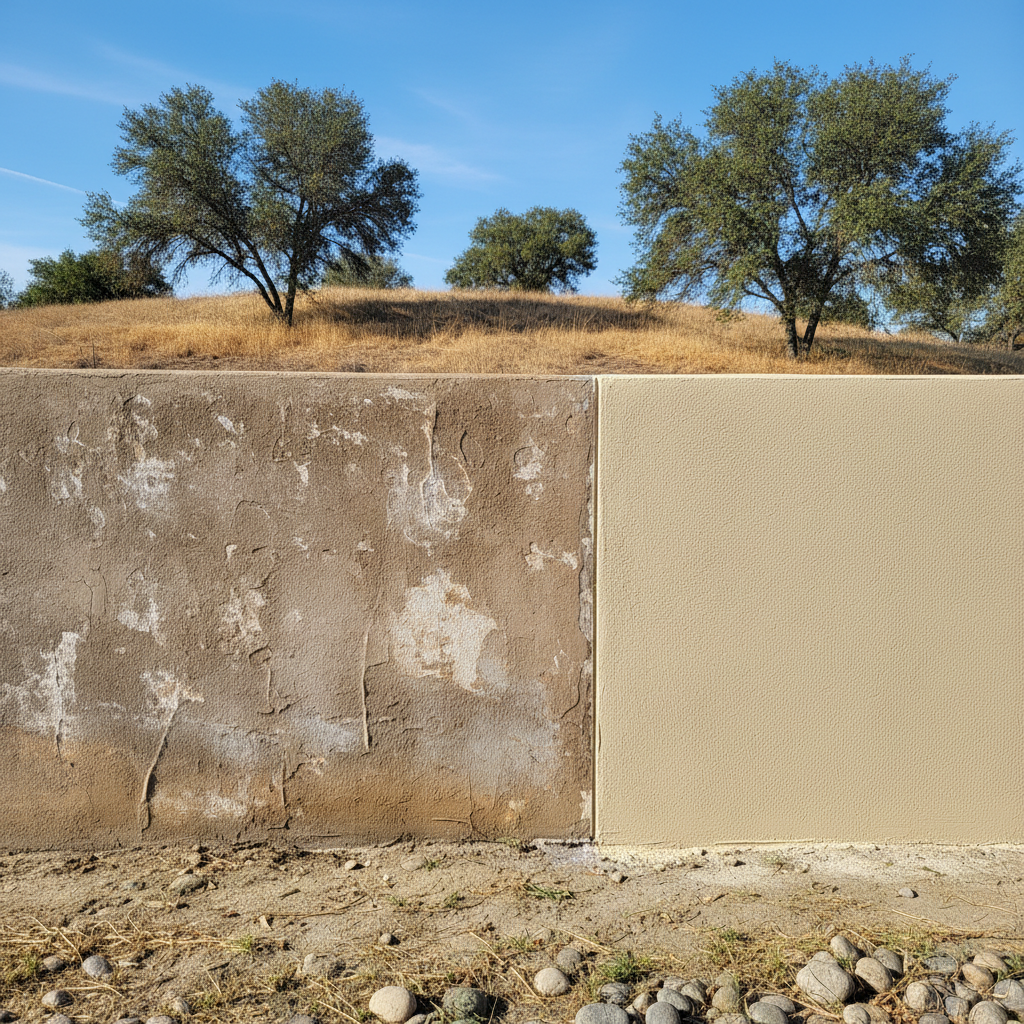
Your stucco's seen better days, right? Maybe it's got cracks spreading like spiderwebs, or maybe it just looks tired and dated. Whatever the reason, you're probably thinking about replacing it, and that brings up a big question: Do you rip it all off, down to the sheathing, or can you just slap new stucco right over the old stuff? It's a common dilemma for homeowners around here, especially with our older homes in areas like the north side of Foothill Boulevard.
Full Tear-Off: The Best Way to Go (Usually)
Let's start with the full tear-off. This is exactly what it sounds like: we take off every single bit of the old stucco, all the way down to the plywood or OSB sheathing. It's a bigger job, no doubt about it, and it's usually what I recommend for most situations. Why?
You get a clean slate. When you tear off the old stucco, you get to see what's underneath. Are there any hidden water issues? Rotten wood? Termite damage? Mold? Trust me, we find all sorts of surprises once that old stuff is off. If you just stucco over it, those problems stay hidden, and they'll just keep getting worse, costing you a lot more down the line.
Proper waterproofing and drainage. This is huge, especially here in California. Modern stucco systems rely on a good weather-resistive barrier (WRB) and proper flashing to keep water out. When we do a full tear-off, we can install a brand-new, up-to-code WRB, rain screen, weep screeds, and flashing around windows and doors. This creates a proper drainage plane, making your home much more resistant to water getting inside. Old stucco systems, especially those from decades ago, just weren't designed with the same level of water management in mind.
Better adhesion and durability. With a fresh, clean surface, the new stucco has the best possible chance to bond properly. You're essentially building a new, strong system from the ground up. This means better long-term durability and fewer issues with cracking or delamination down the road.
Weight considerations. Stucco is heavy. If you're adding a whole new layer on top of an existing one, you're significantly increasing the load on your home's structure. While it's often fine for one additional layer, it's definitely something to consider, especially if the original stucco is already thick or if there are any structural concerns.
Now, the downsides? Cost and time. A full tear-off is more labor-intensive, generates more debris, and takes longer. So, yeah, it's going to hit your wallet harder upfront. But think of it as an investment in the long-term health and value of your home.
Stucco Over Stucco: The Quicker Fix
Okay, so what about just going over the old stucco? This is often called a 're-stucco' or 'stucco overlay.' It's definitely an option in some cases, and it's appealing because it's generally quicker and less expensive upfront.
Cost savings. You save on demolition labor and disposal costs. That's the main draw here, isn't it?
Less mess. No tearing off old material means less dust and debris around your property.
Faster completion. The job can be done more quickly since there's no demo phase.
But here's where you need to be really careful. Stuccoing over existing stucco isn't always a good idea, and it comes with some significant risks:
Hidden problems stay hidden. This is the biggest drawback. If there's mold, rot, or termite damage underneath, you're just sealing it in. Those problems will continue to fester, and by the time they show themselves, they'll be much worse and more expensive to fix.
No proper WRB. You can't install a new, continuous weather-resistive barrier or a proper drainage plane when you're going over old stucco. You might get some surface adhesion, but you're just not getting the same level of water protection as a full system. This means your home is still vulnerable to water intrusion, especially around openings like windows and doors where flashing is critical.
Adhesion issues. The new stucco needs a good, clean, sound surface to stick to. If the old stucco is chalky, cracked, or delaminating, the new layer might not bond properly. This can lead to premature cracking, bubbling, or the new stucco simply falling off.
Increased weight. As I mentioned, stucco is heavy. Adding another layer adds significant weight. Most building codes allow for one additional layer over existing stucco, but it's not always ideal, especially for older homes that might not have been designed for that extra load.
My Recommendation for Rialto Homeowners
Look, I've been doing this for a long time at Rialto Stucco & Plastering, and I've seen it all. While 'stucco over stucco' might seem like a budget-friendly shortcut, it's rarely the best long-term solution. For most homes in Rialto, especially those built before modern waterproofing standards were common, a full tear-off is almost always the smarter choice.
It gives you peace of mind knowing that any underlying issues have been addressed. It allows for a brand-new, up-to-code waterproofing system that will protect your home from our occasional heavy rains and the general wear and tear of the Southern California climate. You get a more durable, longer-lasting finish that adds real value to your property.
The only time I'd seriously consider stuccoing over existing stucco is if the original stucco is in exceptionally good condition – no cracks, no signs of water damage, perfectly sound and well-adhered – and you're simply looking for a cosmetic refresh or a color change. Even then, I'd still recommend a thorough inspection to make sure there are no hidden issues. But honestly, those cases are pretty rare.
Don't cut corners when it comes to your home's exterior. It's your first line of defense against the elements. Invest in doing it right the first time, and you won't regret it.