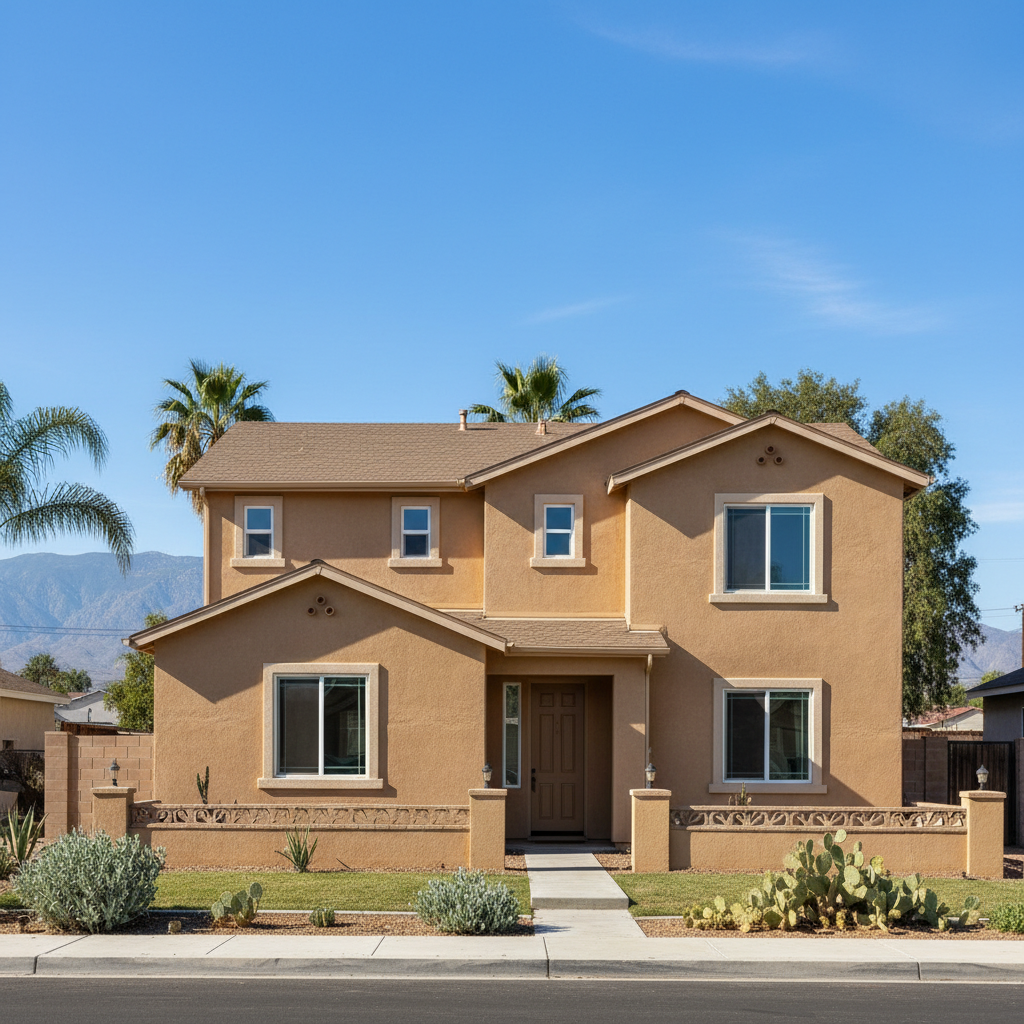
So, you're looking at stucco for your house here in Rialto. Good choice. It's durable, looks great, and holds up well to our Inland Empire sun. But let's be honest, the first thing on most folks' minds is, "How much is this going to cost me?"
It's not a simple answer, but I can give you a solid breakdown of what affects the price, what you should expect, and how to make sure you're not overpaying. I've been doing this for years, and I've seen it all.
What Drives Stucco Installation Costs?
A lot of things go into the final price tag. It's not just the square footage, though that's a big part of it. Here's what we look at:
- The Type of Stucco System: Are we talking about a traditional three-coat system, or something like a one-coat (often called synthetic or EIFS, though true EIFS is different)? Traditional three-coat is usually more labor-intensive and uses more material, so it tends to be pricier upfront, but it's incredibly robust. One-coat systems can be quicker to install, but they have their own considerations. For most homes in areas like the Las Colinas neighborhood, a traditional three-coat is what I recommend for longevity.
- Condition of Existing Walls: If we're going over existing siding or a rough surface, there's prep work. If we have to remove old stucco that's failing, that's a whole extra step and cost for demolition and disposal. A clean, flat surface is always cheaper.
- Architectural Complexity: A simple, boxy house is easier and faster to stucco than a house with lots of corners, arches, gables, and intricate details. Each of those features adds labor and requires more skill and time.
- Scaffolding Needs: Is it a single-story ranch or a two-story with high peaks? Taller homes or those on sloped lots require more scaffolding, which is an added expense for rental and setup.
- Color and Finish: Standard colors are usually included. Custom color matching or specific finishes like a Santa Barbara smooth finish or a heavy lace texture can sometimes add a bit to the material cost or labor.
- Location & Access: While we're talking Rialto, even within our city, access can vary. If it's a tight lot with no room for material delivery or equipment, that can slow things down and add labor.
Typical Cost Ranges in Rialto, CA
Alright, let's talk numbers. For a full stucco installation on an average home, you're typically looking at anywhere from $7 to $15 per square foot. That's a big range, I know, but it reflects all those factors I just mentioned.
- Basic, straightforward job (e.g., single-story, minimal detail, good access): You might be closer to the $7-$10 per square foot mark.
- Average home (e.g., two-story, some architectural features, standard prep): This is usually in the $10-$13 per square foot range.
- Complex projects (e.g., intricate design, extensive prep, difficult access, premium finish): You could see prices climb to $13-$15+ per square foot.
So, for a 1,500 square foot house, you could be looking at $10,500 to $22,500. A 2,500 square foot house might range from $17,500 to $37,500. These are just ballpark figures, but they should give you a realistic idea.
What Should a Quote Include?
When you get a quote from Rialto Stucco & Plastering, or any other contractor, make sure it's detailed. It should clearly outline:
- Square Footage: The exact area being stuccoed.
- Stucco System: Specify if it's three-coat, one-coat, etc.
- Prep Work: What's being done to the existing surface (e.g., removal, lath installation, patching).
- Materials: Type of lath, scratch coat, brown coat, finish coat, and any additives.
- Finishing Details: Specific texture, color, and trim work around windows and doors.
- Cleanup and Disposal: Confirmation that debris will be removed.
- Warranty: What's covered and for how long.
- Payment Schedule: Clear milestones for payments.
Don't just accept a number on a napkin. Get it in writing, and make sure it's comprehensive.
How to Avoid Overpaying
This is where you need to be smart.
- Get Multiple Bids: I always tell people to get at least three quotes. It helps you compare not just price, but also what's included and the contractor's professionalism.
- Check References and Licenses: Make sure the contractor is licensed and insured. Ask for references and actually call them.
- Don't Go with the Absolute Lowest Bid: Sometimes a bid is incredibly low because they're cutting corners on materials, labor, or even proper licensing. That usually means headaches down the road.
- Understand the Scope: Make sure every contractor is bidding on the exact same scope of work. If one quote is way lower, they might have left something out.
- Ask Questions: If you don't understand something in the quote, ask. A good contractor will take the time to explain it to you.
Stucco is a significant investment in your home. Done right, it'll last decades and look fantastic. Take your time, do your homework, and you'll get a great result for a fair price.