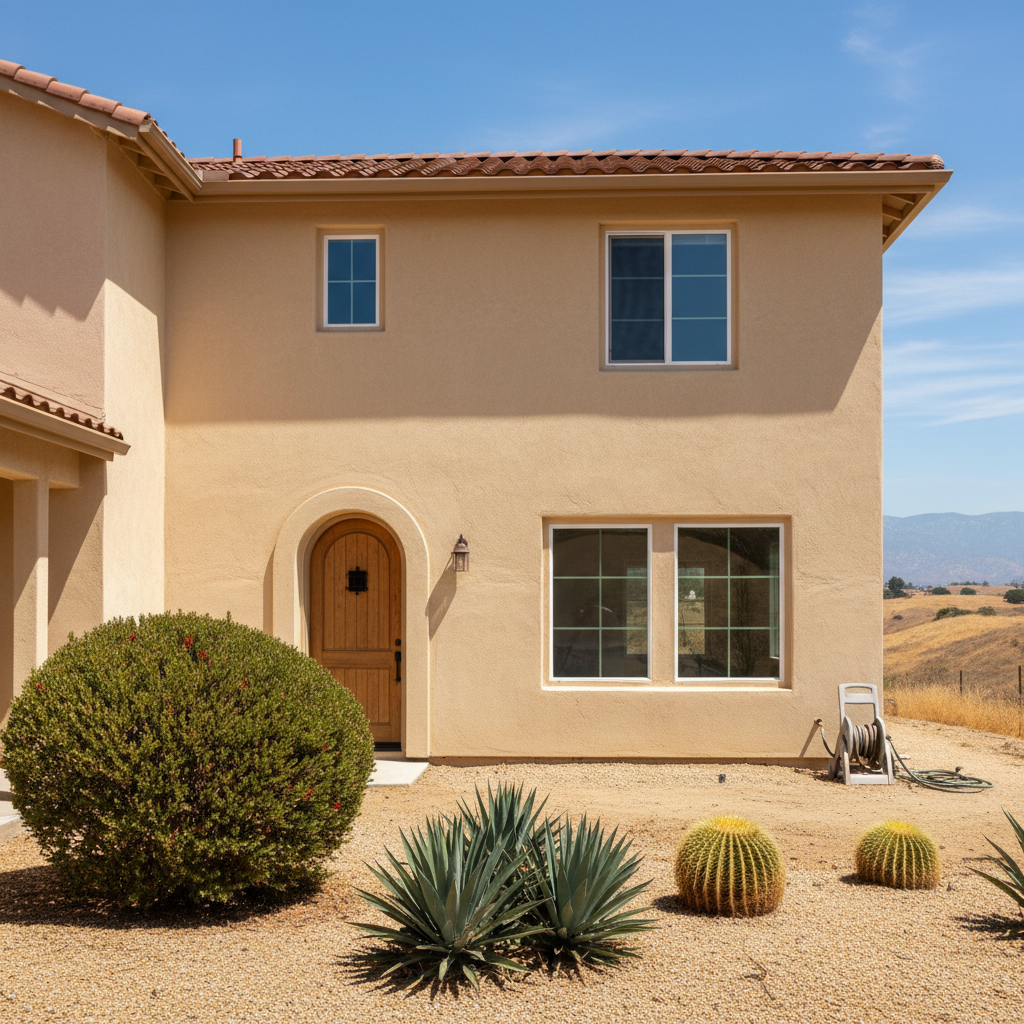
Alright, let's talk about your stucco. You invested in it for a reason, right? It's tough, looks good, and honestly, it's perfect for our Southern California weather. But "tough" doesn't mean "bulletproof." Even the best stucco, like the kind we put on homes all over Rialto, needs a little attention to really last. Think about your car; you wouldn't just drive it without oil changes, would you? Same goes for your stucco.
Making Your Stucco Last in Our CA Climate
Our Rialto climate, with its hot, dry summers and those occasional winter rains, really puts stucco through its paces. The intense sun can be brutal, and those temperature swings? They make materials expand and contract. So, what can you do to help your stucco live a long, happy life?
- Keep it Clean: This is probably the easiest thing you can do. Dust, dirt, and even pollution from the nearby I-10 corridor can build up on your stucco. Giving it a good wash at least twice a year helps prevent discoloration and keeps those textures looking sharp. Use a soft-bristled brush and a pH-neutral cleaner made for masonry. If you're using a pressure washer, keep it on a low setting—no more than 1500 PSI—to avoid damaging the finish.
- Seal it Up: A good quality sealant can make a huge difference. It helps protect against the sun's UV rays, moisture getting in, and staining. Just make sure you pick a breathable elastomeric sealant specifically for stucco in high desert climates. These let the walls breathe while still keeping moisture out. I'd recommend sealing before the peak of summer for the best UV protection, then reapply every few years.
- Landscaping Matters: This might sound a little strange, but your landscaping actually plays a big role. Make sure your sprinklers aren't constantly hitting your stucco walls. Constant moisture can really cause problems. Also, trim back plants, bushes, and trees so they aren't directly touching the stucco. This allows for good airflow and stops moisture from getting trapped against the wall.
- Fix Cracks Fast: We'll get into cracks more in a bit, but for now, just know that fixing small ones quickly stops them from becoming big, expensive headaches. Even tiny cracks can let moisture in, and that's when the real trouble starts.
Regular Maintenance: Your Stucco's Check-Up Routine
Think of this as your stucco's annual physical. You don't need to be a stucco expert, but a quick walk around your house a few times a year can save you a lot of grief.
- Visual Inspection: Walk around your whole home. Look closely at all your stucco surfaces. See any new cracks? Any discoloration? Any spots that look different? Pay extra attention around windows, doors, and where different materials meet, like where your roofline touches the stucco.
- Check Your Caulking: This is a big one, truly. Caulking around windows, doors, and other openings is your first defense against water. Over time, that caulk can dry out, crack, and pull away. If you see any gaps or deterioration, it's time to re-caulk.
- Gutters and Downspouts: Make sure your gutters are clean and clear. Also, check that your downspouts are sending water well away from your foundation and stucco walls. Overflowing gutters can dump a lot of water right onto your stucco, which is exactly what you want to avoid.
Warning Signs of Stucco Problems
Some issues are just cosmetic, but others can be red flags for bigger problems. Here's what to watch out for:
- Cracks: Not all cracks are the same. Hairline cracks—those thin, wispy lines—are pretty common in stucco, especially with our temperature changes and normal house settling. These are often just cosmetic and you can seal them with an elastomeric caulk. However, if you see cracks wider than an eighth of an inch, or if they're diagonal, stair-stepping, or have crumbling edges, that's a sign of a more serious issue. These can point to structural movement or water getting inside.
- Stains and Discoloration: Beyond just dirt, look for dark streaks, especially under windows or at corners. These often mean water is getting behind the stucco. Mold or mildew growth is another clear sign of moisture problems.
- Efflorescence: This looks like a white, powdery, crystalline deposit on your stucco's surface. It happens when water dissolves salts within the stucco (or underlying materials) and then evaporates, leaving the salts behind. While it's usually just a cosmetic issue, it absolutely tells you that moisture is present and moving through your walls. It's more common in cooler, damp weather, but can show up anytime water is involved.
- Blistering or Bubbling: If you see the finish coat bubbling or blistering, that's a strong sign water is trapped behind it, creating pressure.
- Soft Spots: If you push on an area of stucco and it feels soft or spongy, that's a major red flag for water damage and potential rot in the underlying structure.
When to Call a Professional
Look, I'm a big believer in homeowners taking care of their property. But there are times when you really need to call in the pros. If you see any of these warning signs, especially the more serious ones like wide cracks, persistent staining, blistering, or soft spots, don't wait. Ignoring these can lead to much more extensive and expensive repairs down the road.
You should also call us if you're not comfortable tackling a repair yourself, or if you're just not sure what you're looking at. We've seen it all, from minor fixes to major overhauls. At Rialto Stucco & Plastering, we're here to help you figure out what's going on and get it fixed right. We understand the unique demands our desert climate places on exterior finishes, and we'll make sure your stucco stands up to it.
Getting a professional inspection every couple of years is also a smart move. We can spot issues that might not be obvious to the untrained eye and address them before they become big headaches.